
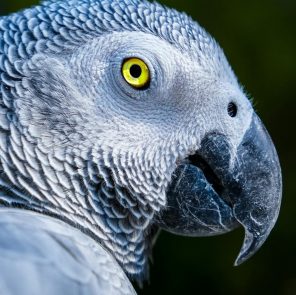
African Grey Parrot

✅ Step 1: Deep Trust Building (Weeks 1–3)
🐦 Environment Setup
Cage in a quiet, secure room with good light
No loud TV or unpredictable noises nearby
Respect personal space: don’t force interaction early
🤝 Bonding Habits
Sit nearby and read/sing in a soft tone
Offer high-value treats (walnuts, papaya) near perch
Let the parrot come to you; never grab or rush
💡 African Greys are slow to trust but incredibly loyal once bonded.
✅ Step 2: Hand Taming & Step-Up Training
✋ “Step Up” Command
Offer forearm or hand slowly
Say “Step Up” firmly but calmly
Use a treat when successful
⏳ Progression Tips
Let the parrot decide the pace
If the bird refuses or flies off, calmly try again later
Never force interaction—it causes long-term fear
✅ Step 3: Talking Training & Vocabulary Building
🧠 Best Practices for Teaching Speech
Start with useful phrases like:
“Hello”
“What’s up?”
“Want a treat?”
Use words in relevant context
Speak clearly, with the same tone daily
🗣️ Word Association Example
| Action | Word |
|---|---|
| Feeding | “Yummy!” or “Eat food” |
| Morning greeting | “Good morning!” |
| Leaving room | “Bye-bye!” |
| Giving treat | “Good bird!” |
🧠 They can understand meaning—not just repeat sounds!
✅ Step 4: Trick Training & Enrichment (Week 4+)
🧩 Smart Tricks for African Greys
| Trick | How to Teach |
|---|---|
| Target Training | Use a stick, reward when touched |
| Colors & Shapes | Use colored blocks with names |
| Fetch | Teach using toy + reward on return |
| Ring Toss | Start with one ring; increase complexity |
| Object Recognition | Teach names like “Key”, “Bell”, etc. |
✅ Step 5: Emotional Training & Stability
Speak kindly, especially during stressful events (vet visits, loud sounds)
Include your bird in family routines—they are social observers
Avoid re-homing or neglect—Greys form deep lifelong bonds
🧠 Emotional neglect can lead to feather plucking, depression, or aggression.
🧰 Essential Tools for Training
✅ Clicker (for marking behaviors)
✅ Target stick
✅ Enrichment toys (rotate weekly)
✅ Flashcards or color blocks
✅ Talking training videos or apps
✅ Puzzle feeders for mental stimulation
🗓️ Sample Daily Routine for African Greys
| Time | Activity |
|---|---|
| 7:30 AM | Greeting, cage uncovered, fresh food |
| 9:00 AM | 10-min training (talking + target) |
| 12:00 PM | Social time outside cage |
| 3:00 PM | Puzzle toy or object play |
| 6:00 PM | Trick training or family interaction |
| 8:30 PM | Wind-down, dim lights, cover cage |
✅ Quick Success Tips
🧠 Provide at least 2–3 hours daily attention
🔁 Repeat daily routines – they need consistency
🍍 Use varied treats to prevent boredom
🪞 Avoid overstimulation—mirrors can confuse them
👂 Listen: African Greys will mimic phrases you say often and emotionally
❌ What to Avoid
❌ Yelling, punishment, or sudden changes
❌ Boredom – causes feather plucking or aggression
❌ Inconsistent handling or long periods of isolation
❌ Smoke, Teflon pans, or strong perfumes – they are highly sensitive to toxins
🎓 Final Thoughts
African Greys are not just pets—they are feathered companions with minds and hearts. Their intelligence and empathy require respect, time, and mental stimulation. If trained well, they will astonish you with their memory, humor, and emotional depth.